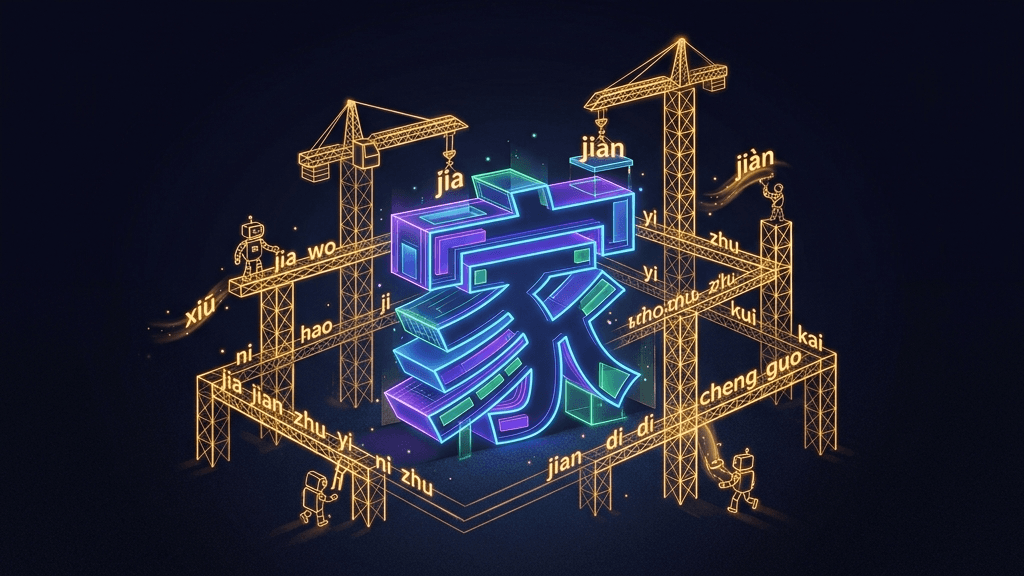
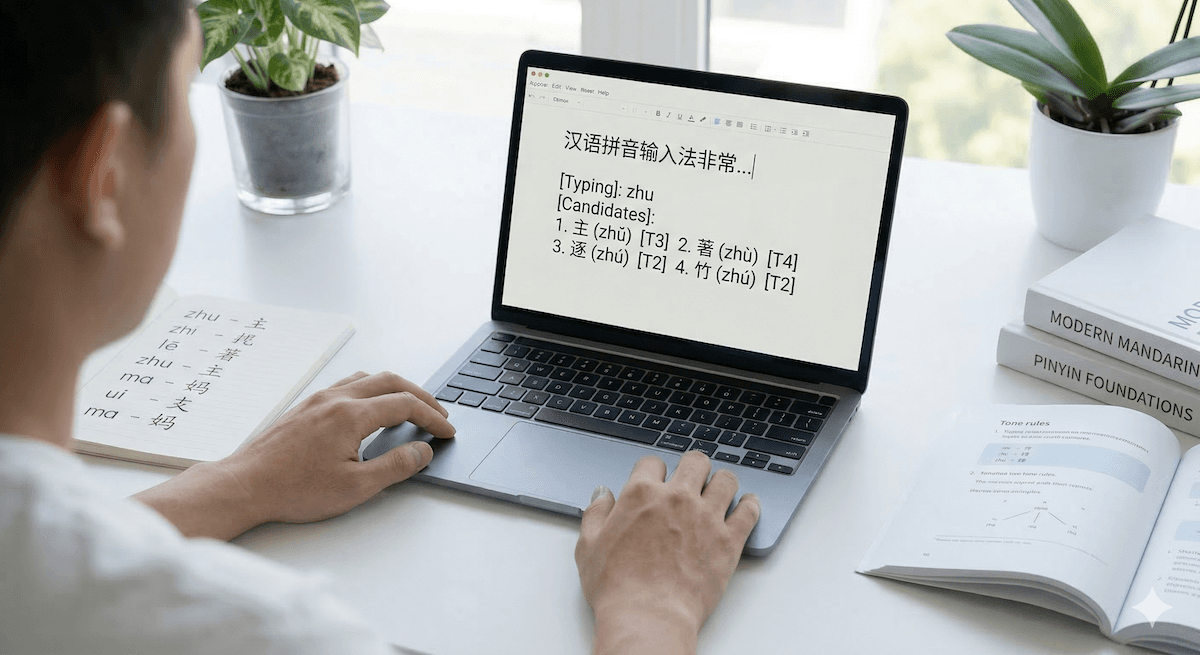
Imagine trying to learn a song just by looking at a complex painting. You can see the art, but you have no idea what melody it represents.
This is what it's like looking at Chinese characters (Hanzi) for the first time. They are beautiful visual symbols, but they don't tell you how to say them out loud.
Pinyin is your sheet music. It’s the tool that tells you exactly which sounds to make.
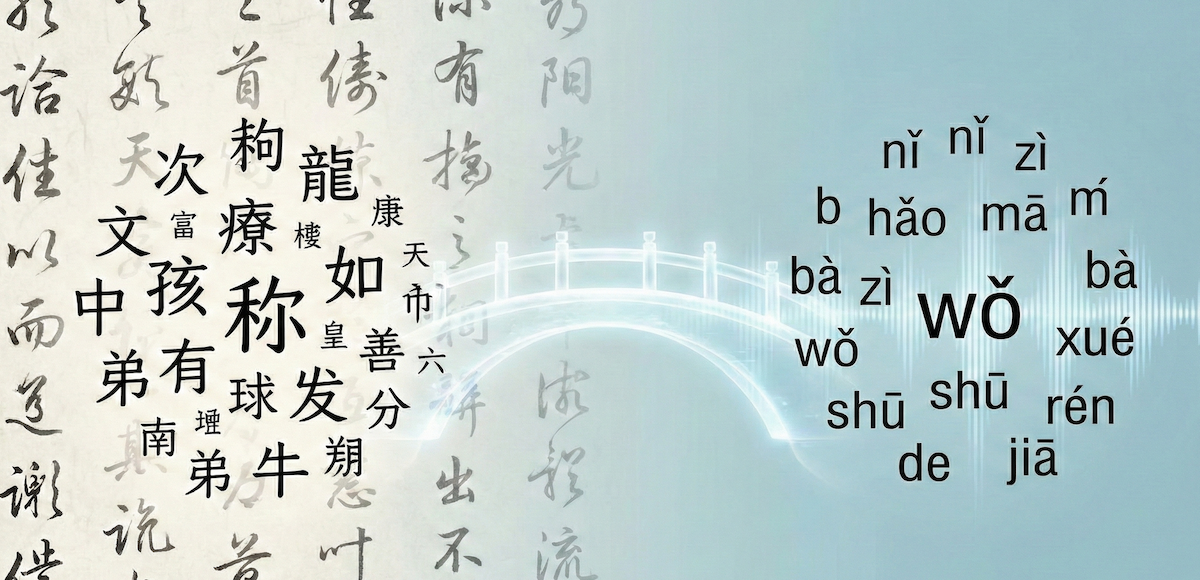
The Bridge Between Seeing and Saying
Pinyin (拼音) literally means "spelled sounds." It is the official system used to write the sounds of Mandarin Chinese using the Roman alphabet, the same A, B, C letters used in many Western languages.
Many Chinese learners may wish for Pinyin to replace Chinese characters one day. But that is not how native speakers feel (at least not this generation).
Pinyin is only a phonetic bridge. It allows beginners to start speaking and understanding the language immediately, without having to memorize thousands of characters first.
I like to compare it to a training bicycle with stabilizers. It helps you find your balance and get moving. Eventually, you will take the stabilizers off and just read the characters, but Pinyin is the essential first step to get you riding.
What One Syllable Looks Like
Every Pinyin syllable is built from up to three parts: an initial (the opening consonant), a final (the vowel sound that follows), and a tone mark that sits on top. Take the word for "mother," mā: the initial is m, the final is a, and the flat line above the vowel is the first tone. Keep the letters but switch the tone to mà and the meaning flips to "to scold." That neat, predictable structure is exactly what makes Pinyin such a dependable learning tool.
A Word of Caution
The biggest trap for beginners is thinking that Pinyin letters sound the same as they do in other languages. They often don't.
For example, the Pinyin 'q' does not sound like the 'q' in most other languages. For many Mandarin learners, this is a completely new sound that you will learn to make from scratch.
Don't worry about the exceptions right now. The most important takeaway is that Pinyin is a reliable, consistent system that will be your best friend on your Chinese learning journey.
Next Step
Ready to see how this system was created? Let's learn about the melody of Chinese Mandarin: The Four Tones.