Many learners assume that once they can read Pinyin, they can read Chinese. This is a misunderstanding. Pinyin is not a writing system for the Chinese language. It is a pronunciation guide designed to get your mouth moving correctly.
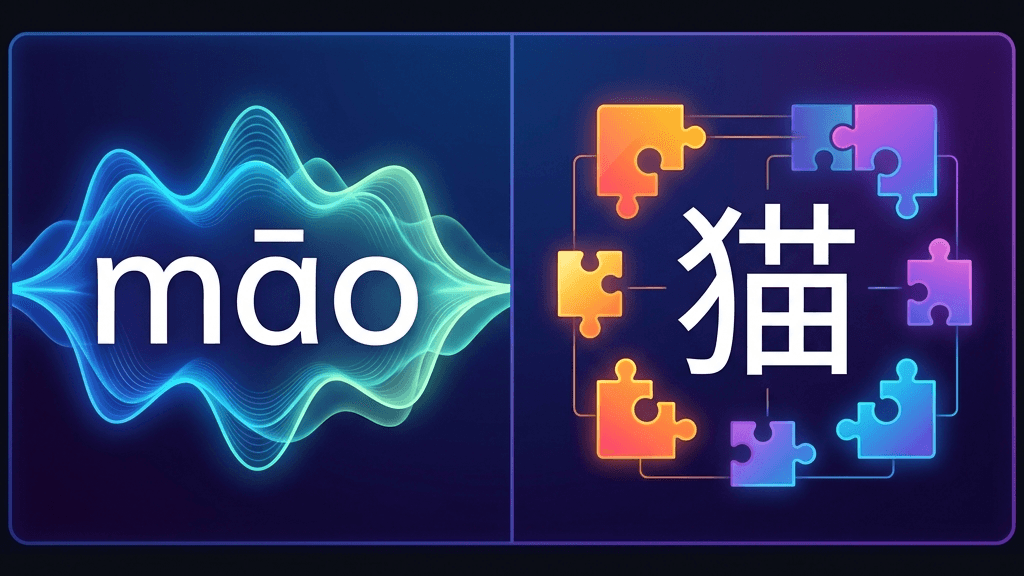
Chinese is written in Characters (汉字). Pinyin is written in Latin letters with Tone marks. These two systems serve completely different purposes. Characters carry meaning. Pinyin carries sound.
Scaffolding, Not the Building
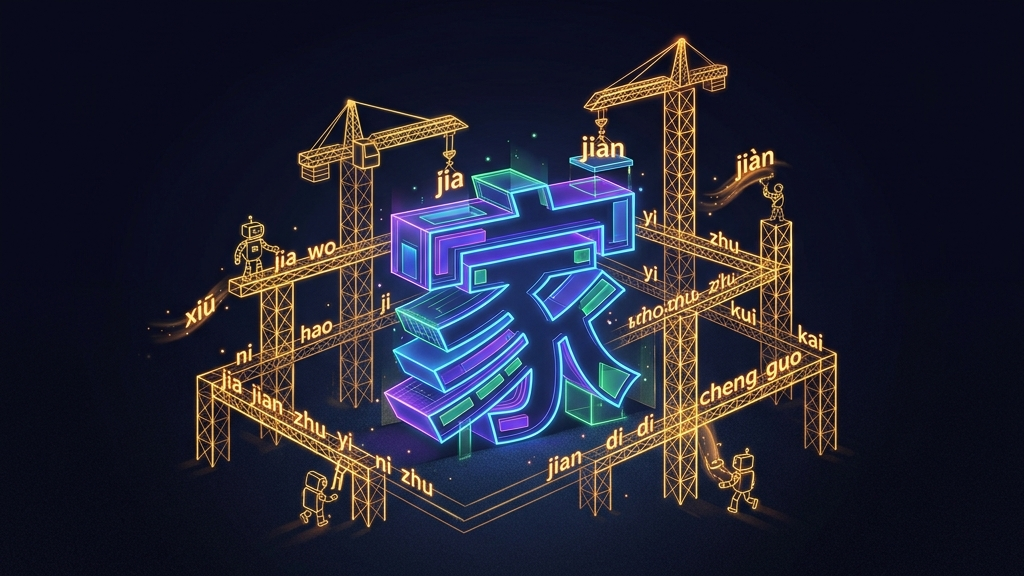
Think of Pinyin as scaffolding around a building under construction. The scaffolding helps workers reach every floor. But nobody lives in the scaffolding. The building is the goal.
Pinyin works the same way. It helps you access the sounds of Mandarin from day one. You can learn to say "nǐ hǎo" before you ever encounter the characters 你好. That is powerful. But if you stop at Pinyin, you are standing on the scaffolding and calling it home.
What Pinyin Does Well
Pinyin is excellent at its job. It encodes every syllable in Mandarin with precision. Each syllable has an Initial, a Final, and a Tone. When you read "zhōng," you know exactly where to place your tongue, how to shape your lips, and which pitch contour to follow.
No other system gives a learner this level of phonetic clarity for Mandarin. Pinyin is the fastest path from silence to speech.
What Pinyin Cannot Do
Pinyin cannot distinguish between words that sound identical. The syllable "shì" maps to dozens of different Characters, each with a different meaning: 是 (to be), 市 (city), 事 (matter), 室 (room), and many more. Without Characters, you have no way to tell them apart on paper.
Pinyin also does not exist in everyday Chinese life the way you might expect. Street signs, menus, books, and text messages are written in Characters. Pinyin appears in classrooms, dictionaries, and phone keyboards. It is a tool, not the destination.
Weaning Off the Scaffolding
Knowing that Pinyin is a tool is one thing; actually moving past it is another. A simple habit helps: when you study a new word, read the characters first and treat the Pinyin as a hint you check only if you get stuck. Cover the Pinyin once you think you know the sound. Little by little, your eyes start to trust the characters, and the scaffolding comes down on its own.
The Transition
Start with Pinyin. Use it to build accurate pronunciation habits. Then gradually shift your attention to Characters. Many learners use both systems side by side for months or even years. That is normal and healthy.
The goal is to reach a point where Characters feel natural and Pinyin becomes a reference tool you use occasionally, not your primary way of reading Chinese.