Imagine trying to play a song on a piano, but you only use one key. No matter how hard you press it, you can’t make a melody.
Speaking Mandarin Chinese without tones is like playing a piano with only one key. You might be saying the right sounds, but you aren't making the music that gives the words meaning.
In Chinese, the pitch of your voice changes the definition of a word. These pitch changes are called "Tones."
The Musical Map
Enter Pinyin. There are four main tones in standard Pinyin. It uses marks above the vowels to show you which "note" to sing.
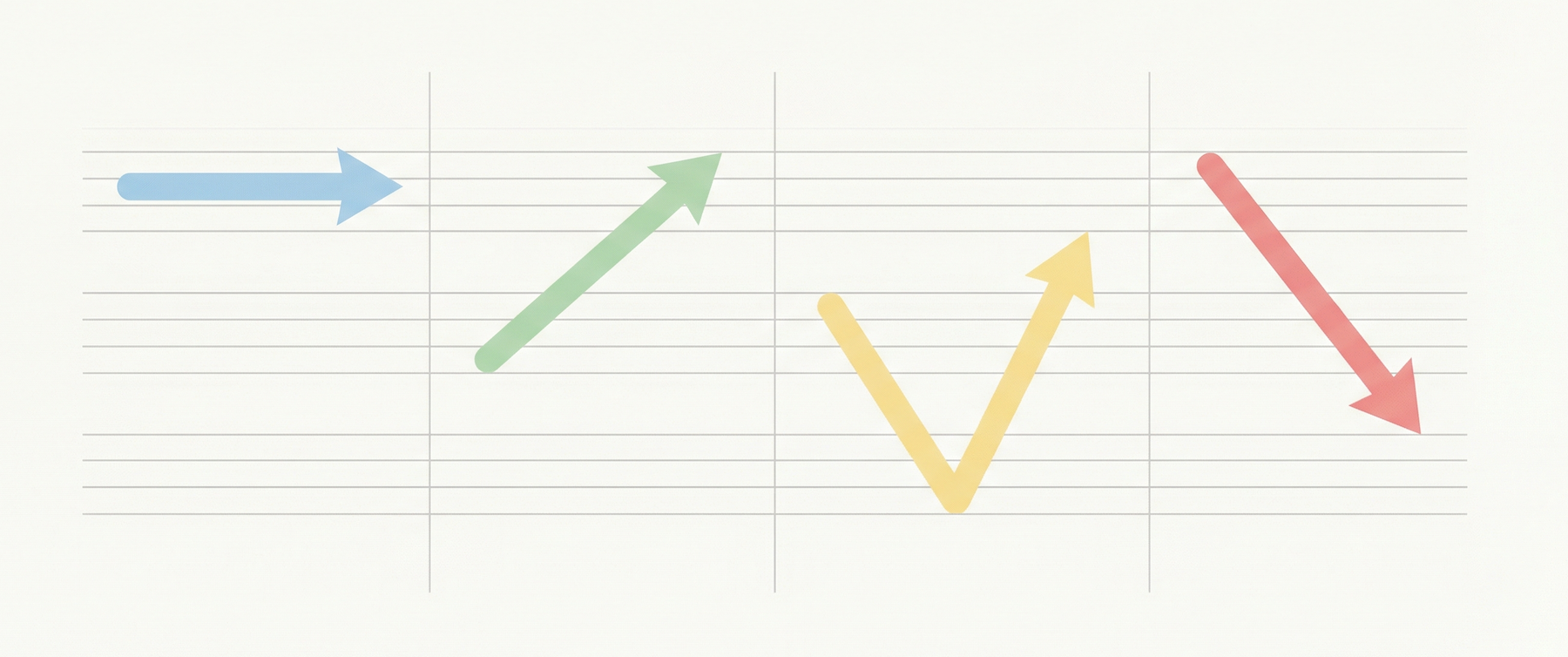
Here is how to navigate these tones using your voice.
The First Tone ( ā ): The Flat Road Your voice starts high and stays high. It is steady and flat, like a hum that doesn't change. Think of the sound a machine makes in a hospital: beeeeeeeeeep.
The Second Tone ( á ): The Climb Your voice starts mid-range and rises upward quickly. It feels like climbing a steep hill.
The Third Tone ( ǎ ): The Valley This tone starts mid-range, drops down low in your throat, and then rises back to mid. Your pitch draws a "V" shape in the air that sounds low throughout.
The Fourth Tone ( à ): The Drop Your voice starts high and drops sharply and quickly. It is short and forceful. Imagine stomping your foot on the ground.
A Quiet Fifth Tone
The four tones are the headline act, but they are not the whole cast. Mandarin also has a light, toneless syllable called the neutral tone. It carries no mark and has no pitch shape of its own; instead it stays short and soft and borrows its pitch from the syllable before it. You hear it on the second half of words like māma (mother) and on small grammar words. It is gentle enough to overlook, so we give it a full lesson of its own in the neutral 5th tone.
Why It Matters
If you use the wrong tone, you use the wrong word. The classic example uses the sound "ma." Let's look at how the meaning changes just by switching the tone markers:
Pinyin Tone | Meaning |
mā (1st tone) | Mother |
má (2nd tone) | Hemp / Numb |
mǎ (3rd tone) | Horse |
mà (4th tone) | To scold |
Yes, that is Mandarin for you! The brain of native speakers are very sensitive to these variations. As a Westerner, I find it quite amazing.
Don't worry about mastering tones immediately. The first step is simply listening and recognizing the melody of Mandarin Chinese.