Pinyin is written in the same 26 Latin letters used across much of the world. This is not a coincidence. It is the result of a deliberate decision made in 1950s China, driven by practical needs and a vision for international communication.
The Problem Before Pinyin
Before Pinyin, several romanization systems existed for Mandarin. The most widely known was Wade-Giles, created by British diplomats in the 19th century. It used unfamiliar letter combinations that were inconsistent in practice. Other systems existed too: Gwoyeu Romatzyh, Yale Romanization, and postal spellings. None became a universal standard.
This created confusion. The same city could be spelled three different ways in three different books. Learners had no single reliable system to follow.
Zhou Youguang and the Design Choice
In 1955, the Chinese government assembled a committee to create one official romanization system. Zhou Youguang, a linguist and economist, led the effort. His team considered three options: a system based on Chinese character strokes, a system using new invented symbols, or a system using the Latin alphabet.
They chose Latin letters. The reasons were entirely practical.
Latin letters were already supported by typewriters, telegraphs, and printing presses around the world. A new symbol set would require new machines, new training, and new fonts. Latin letters required none of that.
International accessibility also mattered. China wanted a system that foreigners could use to learn Mandarin and that Chinese people could use to communicate with the outside world. Latin letters were already familiar to billions of people.
Letters as Containers
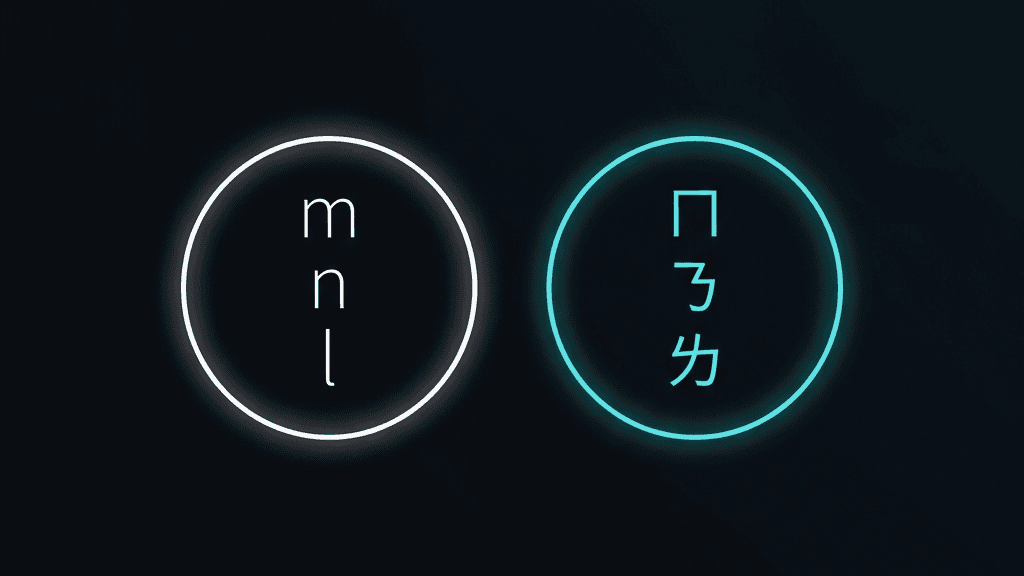
Choosing Latin letters did not mean borrowing sounds from any other language. Zhou Youguang assigned each letter to a Mandarin sound based on what fit best. The letter "q" became [tɕʰ], a sharp aspirated sound made with the tongue pressed against the palate. The letter "x" became [ɕ], a soft hissing sound. These assignments follow Mandarin phonology, not the phonology of any European language.
This is the key distinction. The letters are containers. The sounds inside them are purely Mandarin.
Why the Old System Fell Short
Wade-Giles, the main system Pinyin replaced, leaned on apostrophes and small marks to separate similar sounds: p and p', or t and t', for example. In everyday printing those marks were usually dropped, so two different sounds ended up spelled the same way, leaving readers to guess. Pinyin removed the ambiguity by giving each sound its own plain letter, such as b and p or d and t, with no fragile marks to lose.
A System That Endures
Pinyin was officially adopted in 1958. It replaced the fragmented landscape of older romanization systems. Today, it is the international standard (ISO 7098) and the foundation of Chinese text input on every phone and computer.
The Roman alphabet gave Pinyin a practical advantage that no other option could match: instant compatibility with the tools and eyes of the modern world. That advantage is still paying off today.