If you mention "phonetic systems for Mandarin" to someone in mainland China, they will think of Pinyin. Mention the same topic in Taiwan, and you are likely to hear about Zhuyin, also known as Bopomofo. These two systems serve the same fundamental purpose: they represent the sounds of Mandarin. But they do it in very different ways, and understanding both sheds light on the politics, pedagogy, and history of the Chinese-speaking world.
What Is Zhuyin?
Zhuyin Fuhao (注音符号), literally "phonetic symbols," is a set of 37 characters plus 4 tone marks used to represent every sound in standard Mandarin. The system was introduced in 1918 by the Republic of China government, decades before Pinyin existed.
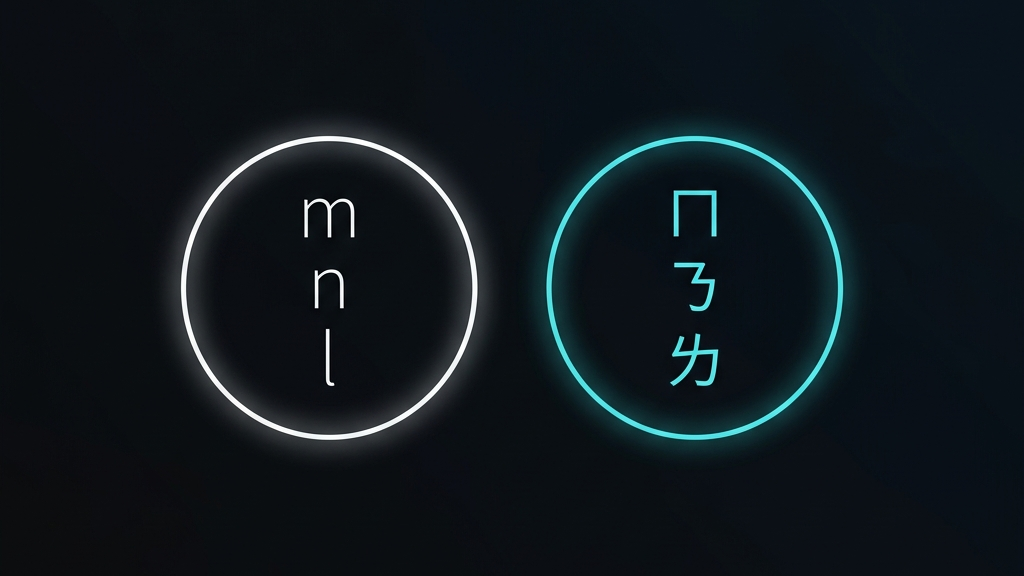
The symbols are derived from ancient Chinese characters and radicals. For example, ㄅ (b) comes from 勹, ㄆ (p) from 攵, and ㄇ (m) from 冂. Unlike Pinyin, Zhuyin uses entirely non-Latin characters, which means learners never risk confusing its symbols with English letters [Bopomofo, Wikipedia].
What Is Pinyin?
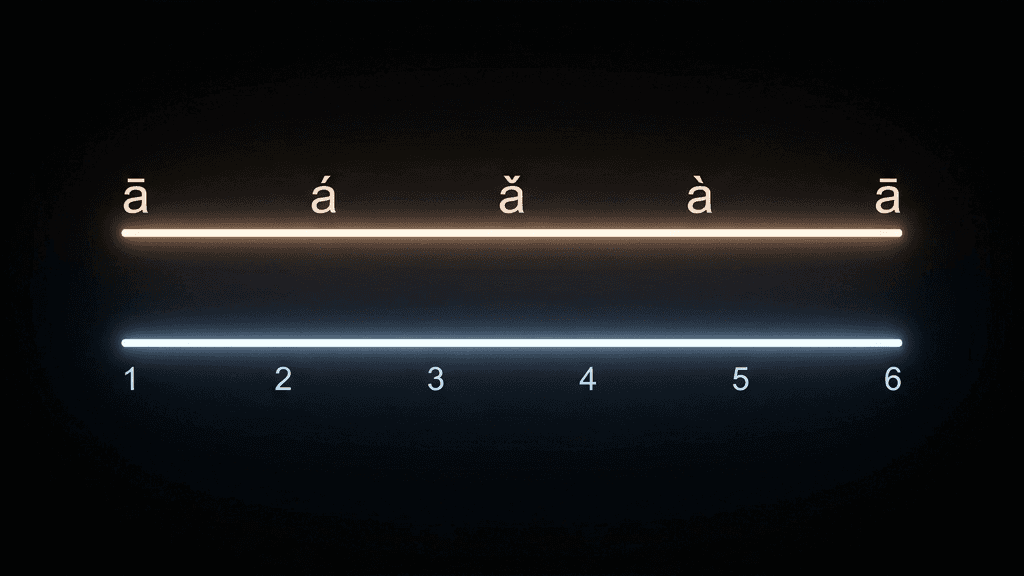
Hanyu Pinyin (汉语拼音), introduced in 1958 by the People's Republic of China, uses the Latin alphabet with tone diacritics to spell out Mandarin sounds. It was designed to improve literacy rates across China and to provide a standard romanization for international use.
Pinyin has since been adopted by the United Nations, the International Organization for Standardization (ISO 7098), and virtually every Chinese language textbook published outside of Taiwan [ISO 7098:2015].
Head-to-Head Comparison
| Feature | Pinyin | Zhuyin |
|---|---|---|
| Script | Latin alphabet | Unique symbols (ㄅㄆㄇㄈ) |
| Origin | 1958, PRC | 1918, Republic of China |
| International use | Global standard | Taiwan only |
| Tone marking | Diacritics above vowels | Marks to the right of the final symbol |
| Risk of L1 interference | Higher (Latin letters suggest English sounds) | Lower (unique symbols carry no prior associations) |
| Digital input | Widely supported on all platforms | Supported on all platforms but less common outside Taiwan |
The Pedagogical Argument
Proponents of Zhuyin argue that its unique symbols prevent a common problem among Pinyin learners: reading Pinyin letters as if they were English. When a learner sees "q" in Pinyin, they must override their instinct to pronounce it as the English /kw/. Zhuyin avoids this entirely because ㄑ carries no prior association for an English speaker.
Taiwanese educators have long maintained that this characteristic makes Zhuyin a cleaner phonetic foundation. Children in Taiwan learn Zhuyin in the first ten weeks of primary school and use it as the sole phonetic scaffold until they transition fully to characters. Pinyin is introduced later, typically in middle school, as a secondary romanization tool.
On the other hand, Pinyin advocates argue that a Latin-based system is immediately accessible to anyone who already reads the Roman alphabet, which includes most of the world. The initial learning curve is lower, even if learners must unlearn some English pronunciation assumptions.
Regional Reality
In practice, the choice between Pinyin and Zhuyin is almost entirely geographical:
- Mainland China, Singapore, Malaysia, and the international community use Pinyin.
- Taiwan uses Zhuyin as the primary phonetic system in education and daily input.
Neither system is inherently superior. They encode exactly the same set of sounds. The difference is cultural and political, rooted in the split between the PRC and the Republic of China in the mid-20th century.
Can You Learn Both?
Absolutely. Many advanced Mandarin learners, especially those who study both simplified and traditional Chinese, find value in learning Zhuyin alongside Pinyin. Zhuyin opens the door to Taiwanese teaching materials, dictionaries, and digital content that use Bopomofo annotations instead of Pinyin.
If you are a Pinyin user curious about Zhuyin, the mapping between the two systems is direct and consistent. Every Pinyin syllable has an exact Zhuyin equivalent, and vice versa. Learning one after the other is not starting from scratch; it is learning a new notation for sounds you already know.