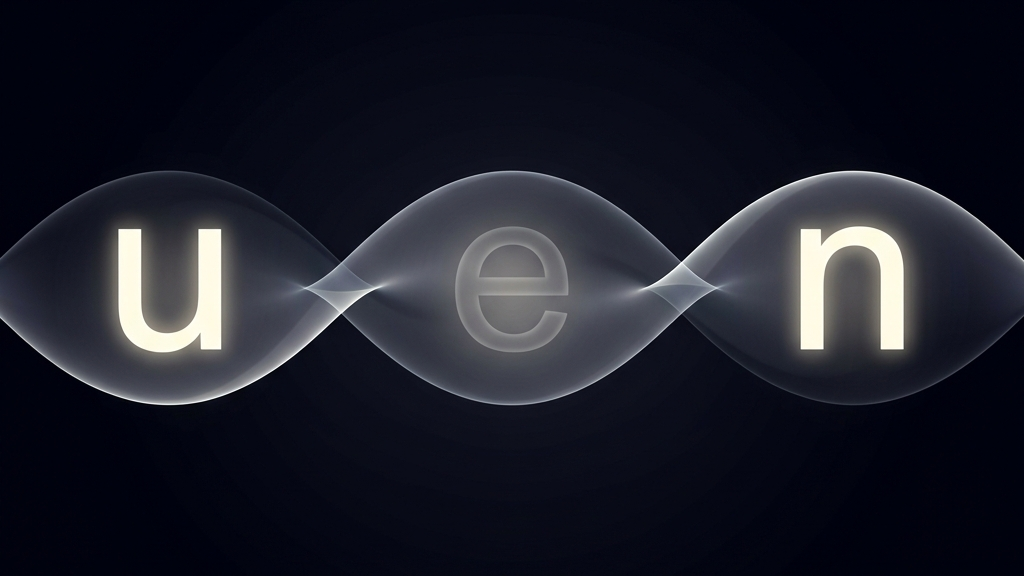
The Pinyin final 'un' is the third and last of the abbreviated vowel combinations. Its full form is 'uen', starting with a rounded 'u', passing through a brief 'e', and ending with the nasal 'n'. When a consonant initial is added, the 'e' disappears from the spelling.
The Rule
When 'uen' follows an initial consonant, it is written as 'un'. The 'e' is removed from the written form.
- 'l' + 'uen' → written as lùn (Theory)
- 'ch' + 'uen' → written as chūn (Spring)
- 's' + 'uen' → written as sūn (Grandson)
- 'zh' + 'uen' → written as zhǔn (Accurate)
When 'uen' stands alone (no initial consonant), it becomes wén, using the 'w' starter rule. The 'e' stays visible in this standalone form.
Why It Matters for Pronunciation
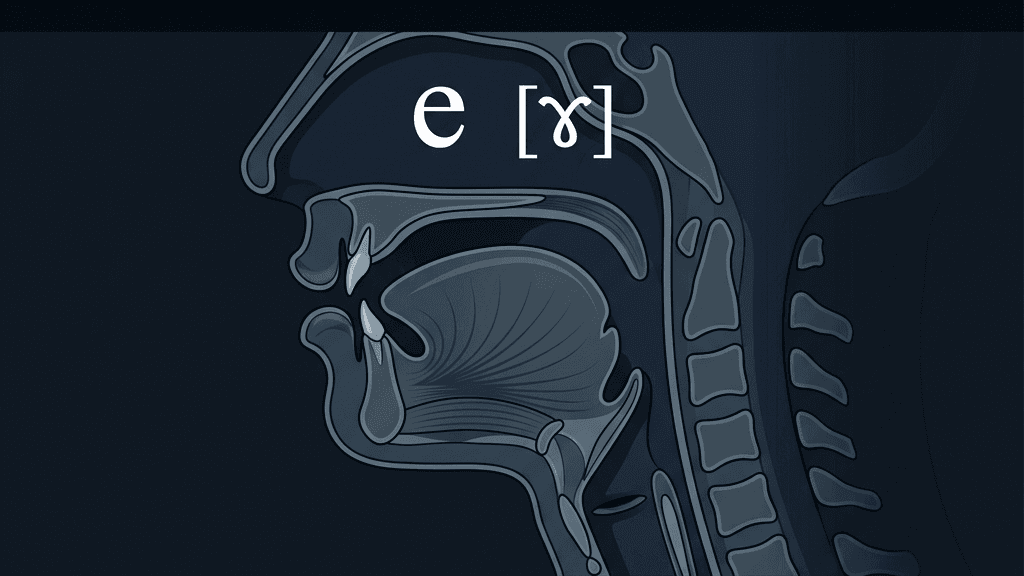
When you say 'chūn', do not jump directly from 'u' to 'n'. There is a subtle 'e' sound between them. Your mouth should glide from the rounded 'u' position, pass briefly through an open 'e' in the middle, and then close with the tongue tip pressing up for the nasal 'n' ending.
Without the 'e' glide, the syllable sounds flat and incomplete. Let the vowel open slightly in the middle before the nasal ending closes it.
The Complete Abbreviation Pattern
Pinyin has three abbreviated finals, all following the same logic:
- 'iou' → 'iu': middle 'o' dropped
- 'uei' → 'ui': middle 'e' dropped
- 'uen' → 'un': middle 'e' dropped
In every case:
- The abbreviation only happens when a consonant initial is present.
- The hidden vowel is dropped from writing but remains as a subtle glide in speech.
- The standalone form (with 'y' or 'w') keeps the full spelling.
Practice
Say these words slowly, letting the 'u' → 'e' → 'n' glide flow naturally:
- kùn (Sleepy): Feel the brief opening before the nasal close.
- gǔn (To roll): The middle 'e' keeps the syllable from sounding blunt.
- rùn (Moist): Let the vowel breathe between 'u' and 'n'.
The Hidden Vowel Is Lighter Here
The middle e in un is even fainter than the one in ui. Pulled toward the following nasal, it relaxes into a soft, neutral glide rather than a bright e. So chūn (spring) eases from a rounded u, through that gentle middle, into the n, without ever opening into a full vowel. There is also a twist after j, q, and x: jūn (army) is really jü plus n, because, as with the invisible dots, the u after those initials is secretly ü.
The Key Takeaway
All three abbreviation rules share one principle: Pinyin sometimes writes less than what you hear. The missing vowel is a guide for your mouth, not for your eyes. Write it short, say it full.