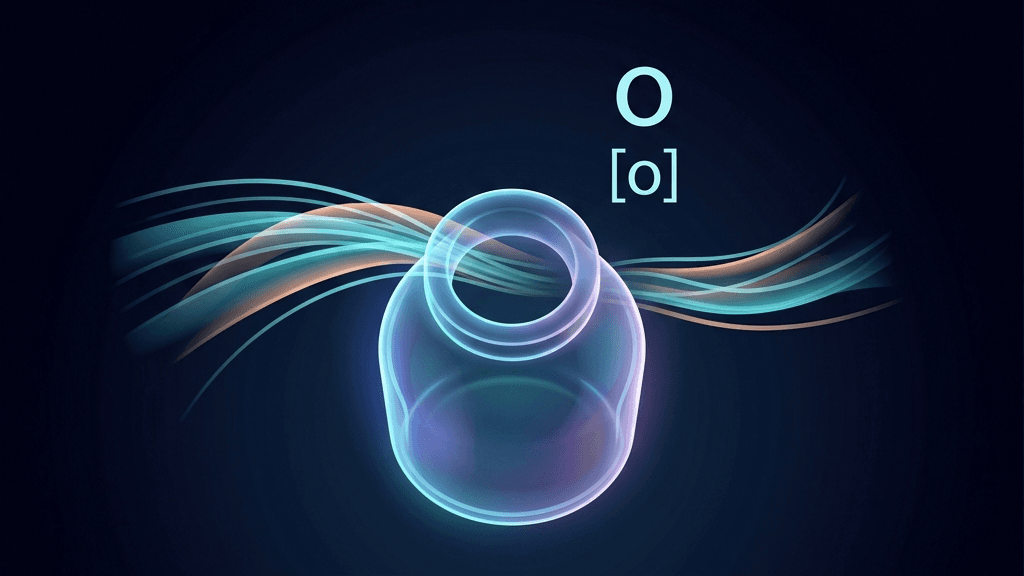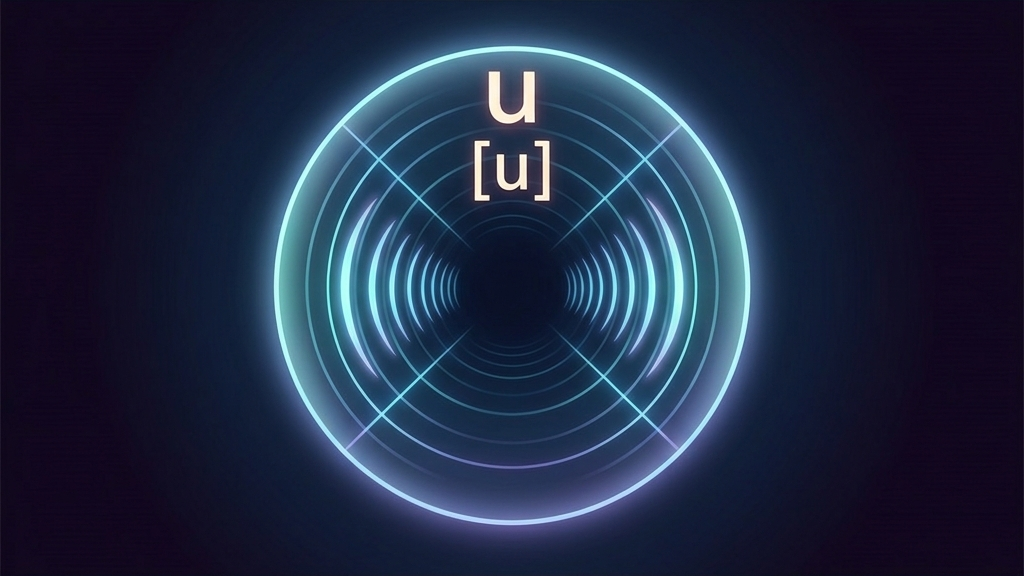
The vowel 'u' is the deepest, most rounded sound among the Mandarin pure vowels. Your lips push forward into a tight circle while the back of your tongue rises high. It is a dark, resonant vowel that you will hear in many everyday words.
The Tunnel Analogy
Picture a small tunnel. Your lips form the entrance, rounded tightly into a circle. The sound travels through this narrow opening, gaining its deep, full quality. The smaller and rounder you make the tunnel entrance, the more accurate your 'u' will be.
Physical Positioning
Here is how to produce a clear 'u' sound:
- Lips: Round them tightly and push them forward as far as comfortable. The opening should be smaller than for 'o'.
- Mouth: Nearly closed. The jaw drops very little.
- Tongue: Pull the body of your tongue all the way back and raise it high toward the soft palate. The back of your tongue nearly touches the roof of your mouth.
- Cheeks: They may feel slightly hollow as your lips push forward. This is normal.
Examples and Practice
Try these common syllables. Focus on maintaining the tight lip rounding throughout:
- wū (Room): Hold the round lip shape steady on the high tone.
- lù (Road): The lips stay pushed forward even as the tone falls.
- zhú (Bamboo): Notice how the initial does not change your lip position.
How 'u' Differs from 'o'
Both 'u' and 'o' are rounded vowels, but they differ in two important ways. First, 'u' has tighter, more protruded lip rounding. Second, the tongue is higher for 'u' than for 'o'. If you alternate between 'bō' and 'bū', you will feel your tongue rise and your lips tighten as you move from 'o' to 'u'.
When u Takes the Lead
Like the bright i, the deep u is a natural connector. It glides into other vowels to build finals such as ua (guā, melon), uo (guó, country), and uai (kuài, fast), where the rounded u is the launch point that slides into the next sound. And when u would start a syllable on its own, Pinyin writes it with a w: u becomes wu, and uan becomes wan. The sound does not change; the w is just a spelling helper that marks where the syllable begins.
Building Vowel Awareness
With 'u', you now have four pure vowels: wide 'a', rounded 'o', narrow 'i', and deep 'u'. Each occupies a distinct position in your mouth. Together, they form the four corners of the Mandarin vowel space. The next vowel, 'ü', will add one final dimension to complete your set.