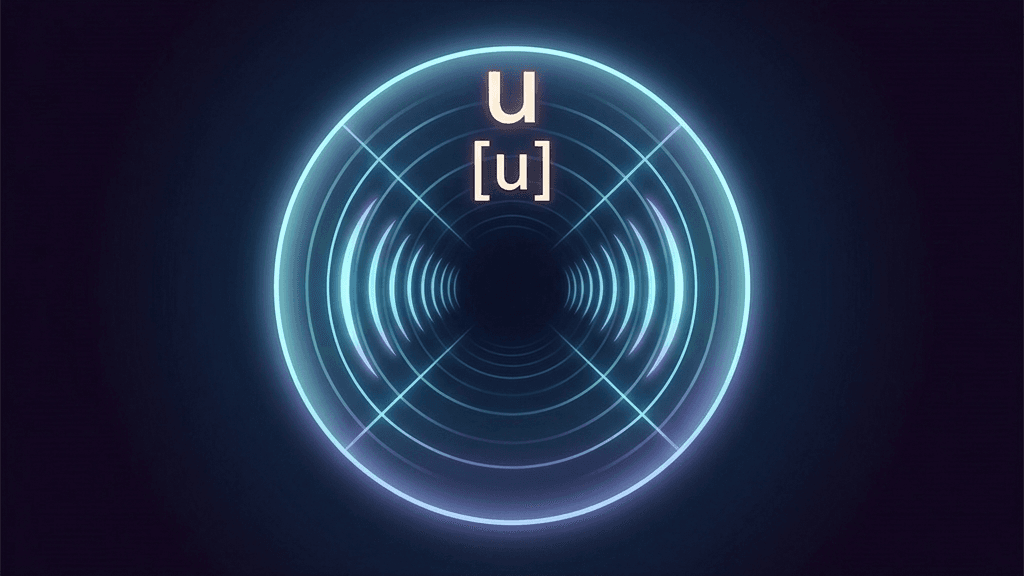
The vowel 'ü' has two dots above it that make it easy to identify. But in many common syllables, those dots disappear, even though the sound remains exactly the same. This is one of the most important spelling rules in Pinyin, and missing it leads to mispronunciation.
The Rule
When 'ü' appears after the initials j, q, x, or y, the two dots are dropped. The letter is written as 'u', but the sound is still 'ü', lips rounded, tongue high and forward.
The dots are only kept after l and n, because these initials can pair with both 'u' and 'ü', and the dots are needed to tell the two sounds apart.
Why the Dots Disappear
The initials 'j', 'q', 'x', and 'y' can never be followed by a true 'u' sound. They only ever pair with 'ü'. Since there is no ambiguity, no possibility of confusion, the dots are removed to simplify the writing. It is a shortcut built into the Pinyin system.
Examples: Dots Dropped (But Sound Stays)
- jū (To reside): written 'ju', pronounced 'jü'
- qù (To go): written 'qu', pronounced 'qü'
- xué (To study): written 'xue', pronounced 'xüe'
- yǔ (Rain): written 'yu', pronounced 'yü'
Examples: Dots Kept (Because Ambiguity Exists)
- lǜ (Green): dots kept because 'lù' (Road) also exists
- nǚ (Woman): dots kept because 'nǔ' (Effort) also exists
The Practical Impact
This rule means that every time you see 'u' after 'j', 'q', 'x', or 'y', you must round your lips and raise your tongue forward, the 'ü' position. Do not use the deep, back 'u' sound.
A common mistake is to read 'jū' and produce a deep 'u' because that is what the letter looks like. But the initial 'j' is your signal: the 'u' here is always 'ü'.
Pinyin Trims Whatever It Can Predict
The vanishing dots are one example of a habit that runs through the whole system: Pinyin drops anything the reader can reliably guess. The same instinct hides the middle vowels in iu, ui, and un, and turns a leading i or u into y or w. In every case the rule is the same: if the sound is predictable from its surroundings, the spelling leaves it out to stay short. Seeing the pattern makes each individual shortcut feel less like a trick and more like one consistent idea.
A Quick Reference
- After j, q, x, y → 'u' is always pronounced 'ü' (dots dropped)
- After l, n → 'u' and 'ü' are different sounds (dots kept to distinguish)
- After all other initials → only true 'u' exists (no 'ü' possible)
Remember: the dots may vanish from the page, but the sound never changes. Your lips should always round forward when you see 'u' after 'j', 'q', 'x', or 'y'.