The Pinyin final 'ui' is another abbreviation. Its full form is 'uei', a three-part vowel glide. When a consonant initial is added, the middle 'e' disappears from the spelling. But just like the 'iou' → 'iu' rule, the hidden vowel still leaves its mark on the pronunciation.
The Rule
When 'uei' follows an initial consonant, it is written as 'ui'. The 'e' is removed from the written form.
- 'd' + 'uei' → written as duì (Correct)
- 'h' + 'uei' → written as huí (To return)
- 'g' + 'uei' → written as guì (Expensive)
- 'z' + 'uei' → written as zuì (Most)
When 'uei' stands alone (no initial consonant), it becomes wéi, using the 'w' starter rule. The 'e' stays visible in the full spelling.
Why It Matters for Pronunciation
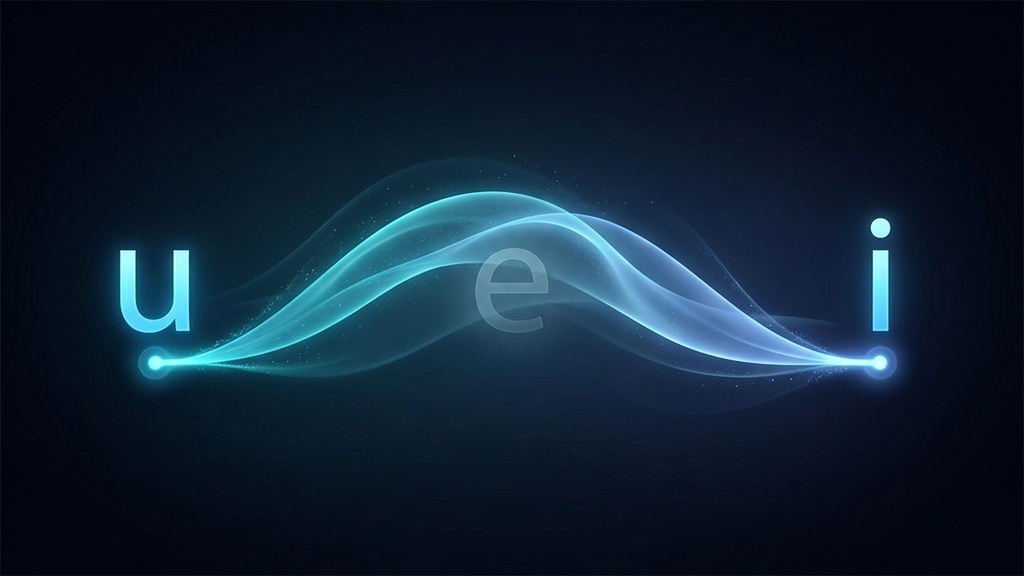
When you say 'duì', your mouth should not jump directly from 'u' to 'i'. There is a subtle 'e' sound in between. The vowel glides from the rounded 'u' position, passes through a brief 'e' in the middle of the mouth, and arrives at the high, bright 'i' position.
Skipping the 'e' entirely makes the syllable sound clipped and unnatural. Let the glide travel through all three positions for a smooth, natural result.
Where the Tone Mark Goes
The tone mark in 'ui' is placed on the last vowel letter: the 'i'. So you will see duì, huí, guì. This is consistent with the tone mark rule for abbreviated finals.
A Common Pattern
You may notice that Pinyin has a habit of abbreviating three-part vowel glides when a consonant comes before them:
- 'iou' → 'iu' (middle 'o' dropped)
- 'uei' → 'ui' (middle 'e' dropped)
- 'uen' → 'un' (middle 'e' dropped; covered in the next article)
In each case, the rule is the same: the middle vowel is removed from the spelling but lingers in the pronunciation. Recognizing this pattern helps you read Pinyin more accurately.
Which e Is Hiding Here
The vanished e in ui is not the deep, back e you hear in a word like hē. It is the bright, forward e of the ei combination. So duì glides from a rounded u, through that light forward e, up to a clear i, exactly the e you would say in wéi. Knowing which e it is keeps the glide bright and smooth rather than swallowed and dark, which is the most common way learners make ui sound off.
Practice
Say these words slowly, feeling the full 'u' → 'e' → 'i' glide:
- shuǐ (Water): Let the 'e' glide through gently.
- tuī (To push): The middle vowel keeps the syllable smooth.
- cuì (Crisp): The glide is quick but present.