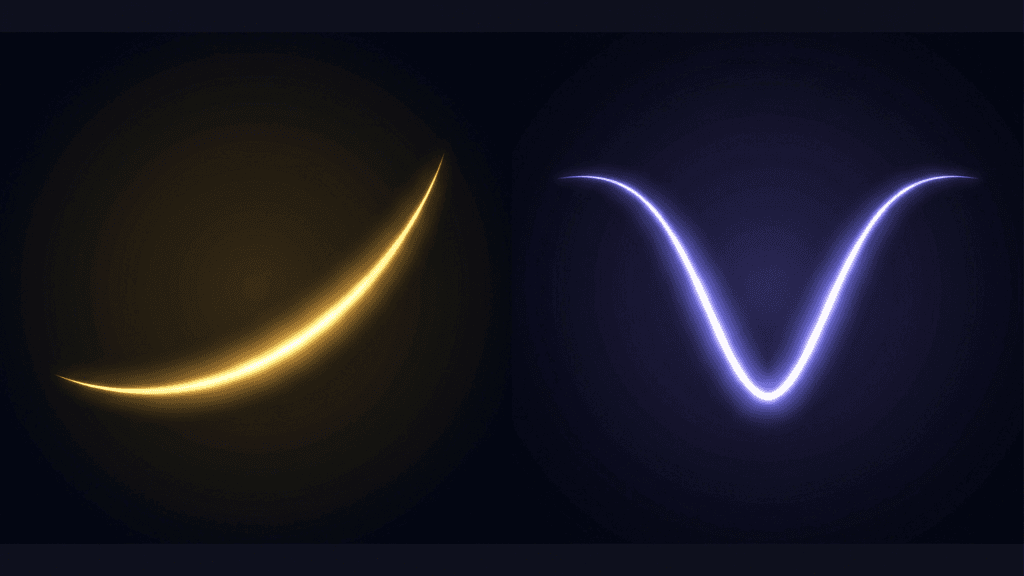
A small mark above a vowel can change the entire meaning of a word. In Mandarin Chinese, these marks are not decoration. They are instructions for your voice.
Pinyin uses four Tone marks to show pitch. Each mark tells you exactly how to shape the rise and fall of your voice. Change the mark, and you change the word.
One Syllable, Four Meanings
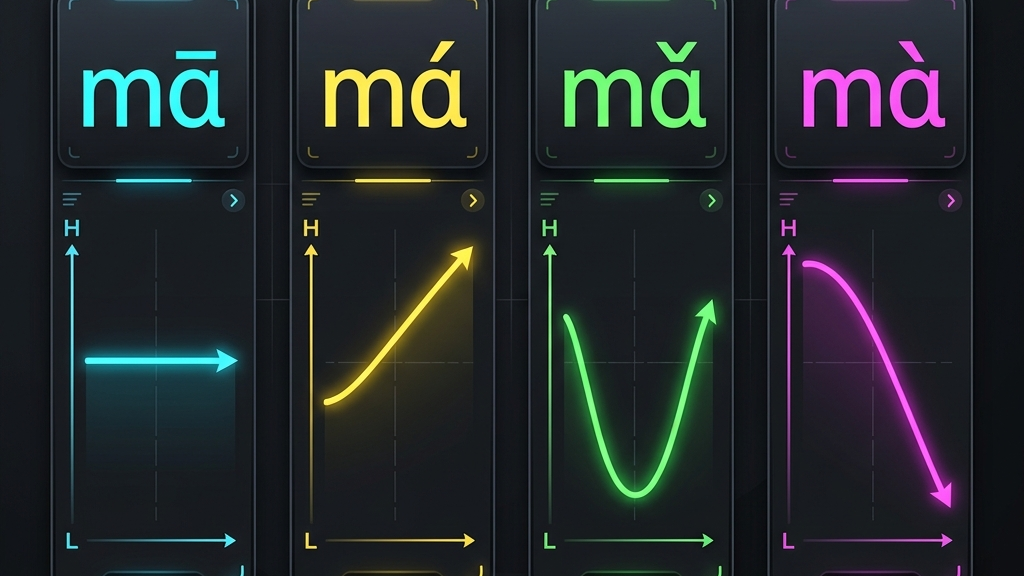
Take the syllable "ma." With four different Tone marks, it becomes four completely different words:
- mā (1st Tone), 妈, mother
- má (2nd Tone), 麻, hemp
- mǎ (3rd Tone), 马, horse
- mà (4th Tone), 骂, to scold
The letters are identical every time. Only the Tone mark changes. And with it, the meaning shifts completely.
What Each Mark Tells You
Each Tone mark is a miniature pitch diagram. It shows the direction your voice must travel.
The first Tone mark (ā) is a flat line. Your pitch stays high and level. The second Tone mark (á) rises. Your pitch climbs upward. The third Tone mark (ǎ) dips low and then rises back up. It traces a small valley. The fourth Tone mark (à) falls sharply. Your pitch drops fast and hard.
When the Wrong Tone Changes Everything
Tones are not a small detail you can skip. Take shuǐjiǎo and shuìjiào. They use the same syllables but different tones, and they mean very different things: shuǐjiǎo (水饺) is a plate of dumplings, while shuìjiào (睡觉) means to go to sleep. Slip on the tones and you might tell a friend you want to eat sleep. Pairs like this show why the marks above the vowels deserve your full attention from the very beginning.
Why This Matters
In many languages, pitch adds emotion or emphasis. In Mandarin, pitch adds meaning. A rising pitch is not a question. It is a different word.
This is why Tone marks are not optional. Without them, Pinyin is incomplete. The syllable "ma" with no Tone mark is ambiguous. It could mean any of those four words.
Training Your Eyes
When you read Pinyin, train yourself to notice the Tone mark first. It is the most important part of the syllable. The Initial and Final tell you which sounds to make. The Tone mark tells you how to say them.
Over time, reading Tone marks becomes automatic. Your eyes will catch them instantly, and your voice will follow. Start slow. Read each mark carefully. The precision you build now will pay off in every conversation you have in Mandarin.