When most people hear the word "Pinyin," they immediately picture language classrooms, flashcards, and the sheer panic of trying to master the four tones of Mandarin Chinese. While Pinyin is undeniably the training wheels for anyone learning the language, its real-world utility extends far beyond the walls of a classroom.
As global commerce becomes increasingly intertwined with Chinese markets, accurate phonetic transcription has evolved from a simple study aid into the invisible plumbing of the modern digital economy. From high-stakes legal documentation to the GPS in your phone, here is how Pinyin is actually used in the professional world.

The Invisible Keyboard of a Billion People
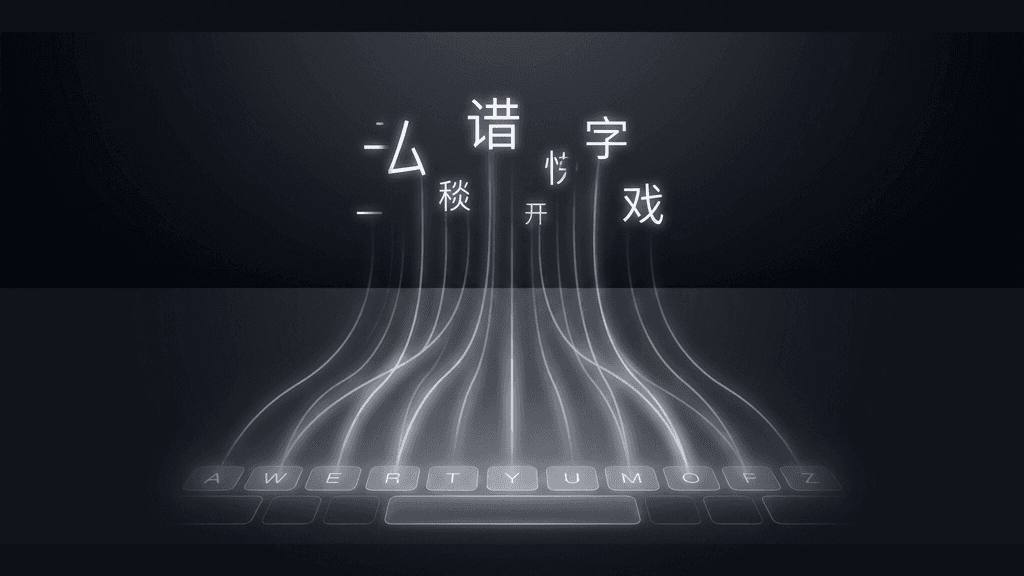
If you’ve ever wondered how business professionals in China quickly type complex characters on a standard QWERTY keyboard, the answer is Pinyin.
Pinyin is the backbone of the Input Method Editor (IME): the software revolution that brought Chinese typing into the digital age. People don't manually draw characters stroke-by-stroke on their laptops. Instead, they type the phonetic Pinyin (like nihao) and select the correct characters (你好) from a predictive menu. This makes Pinyin the primary driver of digital literacy and corporate communication across the Chinese-speaking world.
The "Shi" Problem: Audio Intelligence and AI
In the media and tech industries, companies analyze mountains of Chinese audio data, from customer support calls to market research. To do this, Artificial Intelligence often converts speech into Pinyin first.
However, this is where Pinyin’s most entertaining limitation comes into play: homophones. Mandarin is famous for syllables that sound exactly alike. For instance, the syllable "shi" could mean "lion," "history," "is," "stone," or "market."
If AI stopped at Pinyin, a sentiment analysis algorithm wouldn't know if a customer was trying to buy a "stone" or a "lion." Therefore, Pinyin acts as the crucial phonetic bridge, allowing Natural Language Processing (NLP) models to standardize audio before mapping it to the correct Chinese characters (Hanzi) for deep semantic analysis.

Lawsuits and Logistics: The Global Standard
The legal and logistics sectors demand absolute clarity. When you ship a package from a factory in Shenzhen to a warehouse in New York, the shipping labels and GPS routing software rely entirely on Pinyin. Without it, Western logistical databases simply couldn't process the destination names.
In the legal realm, Pinyin serves as an official international standard [1]. When drafting international contracts, patents, or intellectual property filings involving Chinese entities, a brand or individual's name is legally recorded using its official Pinyin romanization. This ensures that global entities can accurately identify assets without requiring native fluency in Hanzi, a standard so important that even massive institutions like the U.S. Library of Congress completely overhauled their cataloging systems to adopt it [2].
Sorting the Haystack: Data Management
Imagine managing a global HR database loaded with millions of Chinese names and addresses. Searching and sorting these records purely by Chinese characters can be computationally complex and incredibly frustrating for non-native staff.
Pinyin acts as the ultimate index. By attaching a Pinyin property to database entries, companies enable fast, alphabetical search capabilities. A sales representative in London can instantly pull up the profile for "Zhang Wei" just by typing the Pinyin, completely bypassing the need for a specialized keyboard.
Empowering Educators and Content Creators
Even with its vast corporate applications, we can't forget the educators. The demand for high-quality Mandarin learning materials is explosive, and modern web standards actually have built-in rules for displaying Pinyin elegantly above Chinese characters on websites [3].
Historically, typing out Pinyin with proper tone marks was a painstakingly slow, manual process. Today, automated conversion tools allow educators and content creators to instantly generate perfectly tone-marked Pinyin for entire books. This saves thousands of hours and guarantees pedagogical accuracy for students around the world.
The Pinyinize Advantage
Whether you are a data scientist training speech models, a legal clerk filing global patents, an educator building the next great curriculum, or a student dedicated to fluency, accurate Pinyin conversion is an undeniable necessity. As the bridge between the phonetic world and the semantic complexity of Chinese characters, Pinyin proves itself every day as a quiet engine of global communication.
Sources & Citations
[1] ISO 7098:2015: The International Organization for Standardization's official mandate establishing Hanyu Pinyin as the international standard for the romanization of modern Chinese. (ISO Official Reference)
[2] The Library of Congress (LOC): In 2000, the LOC and other major Western institutions completed a massive transition from the outdated Wade-Giles system to Pinyin to standardize global documentation and library sciences. (LOC Pinyin Conversion Guidelines)
[3] W3C Chinese Layout Requirements: The World Wide Web Consortium outlines the standardized use of "Ruby characters" (Pinyin annotations placed alongside or above base Hanzi) to ensure web accessibility and readability for Chinese learners online. (W3C Standards)