The vowel 'i' is one of the brightest sounds in Mandarin Pinyin. It is produced at the very front of your mouth, with your tongue reaching high toward the roof. If 'a' is the widest vowel, 'i' is the narrowest. It is a sharp, focused sound that cuts through clearly.
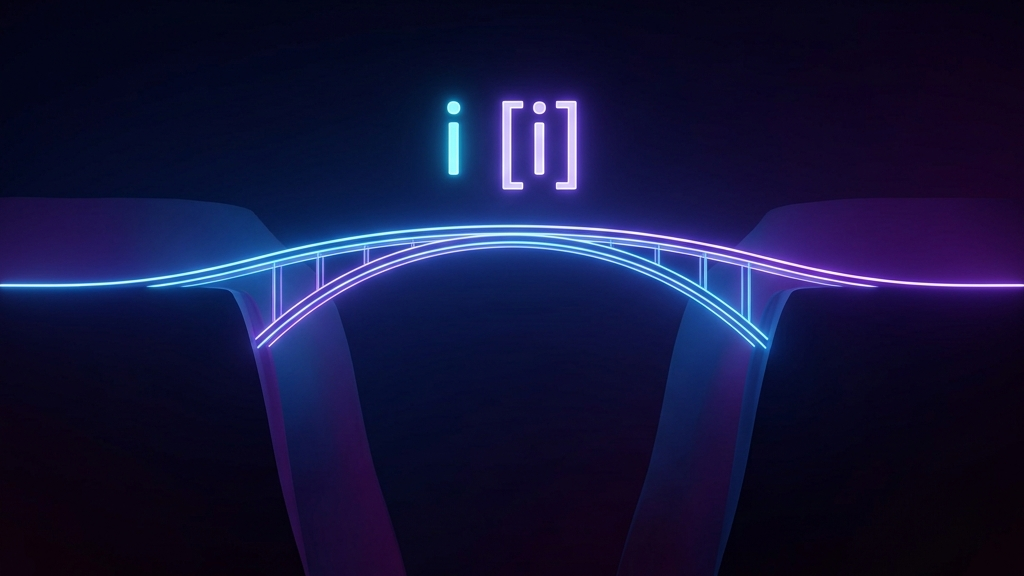
The Narrow Bridge Analogy
Imagine a narrow bridge stretching across a river. Your tongue is that bridge. It rises high, almost touching the hard palate, leaving only a thin gap for air to pass through. The narrower the gap, the clearer the 'i' sound becomes.
Physical Positioning
Here is how to form the vowel 'i' precisely:
- Lips: Spread them wide, pulling the corners of your mouth apart. Your lips should feel stretched but relaxed.
- Mouth: Nearly closed. The opening is very small compared to vowels like 'a' or 'o'.
- Tongue: Raise the front of your tongue high toward the hard palate. The tip of your tongue presses lightly against the back of your lower front teeth.
- Jaw: Keep it almost closed. There is very little jaw movement for this vowel.
Examples and Practice
The vowel 'i' appears in countless Mandarin syllables. Start with these:
- yī (One): A high, level tone with a bright, steady sound.
- bǐ (Pen): The dipping tone does not change your tongue height.
- qí (Ride): Keep the tongue pressed high as the tone rises.
Watch for the Variations
The letter 'i' in Pinyin has three distinct pronunciations depending on the initial that comes before it. After 'zh', 'ch', 'sh', and 'r', it becomes a buzzing sound made with the tongue curled back. After 'z', 'c', and 's', it becomes a hissing sound with the tongue held forward. In all other positions, it is the bright, high 'i' described here. These special cases will be covered in a dedicated lesson.
The Great Connector
The bright i is the busiest gliding vowel in Mandarin. It loves to link an initial to a following vowel, forming finals like ia (jiā, home), ie (xiě, to write), iao (xiǎo, small), and iu (liù, six). In each, the i is a quick, high starting point that slides smoothly into the next sound. Treat it as a springboard rather than a held note, and these common finals stop feeling crowded and start flowing as single, connected syllables.
The Power of Contrast
You now have three pure vowels in your collection: wide 'a', rounded 'o', and narrow 'i'. Notice how each one uses a completely different mouth shape. Training your mouth to snap quickly between these positions is the foundation of clear Mandarin pronunciation.