

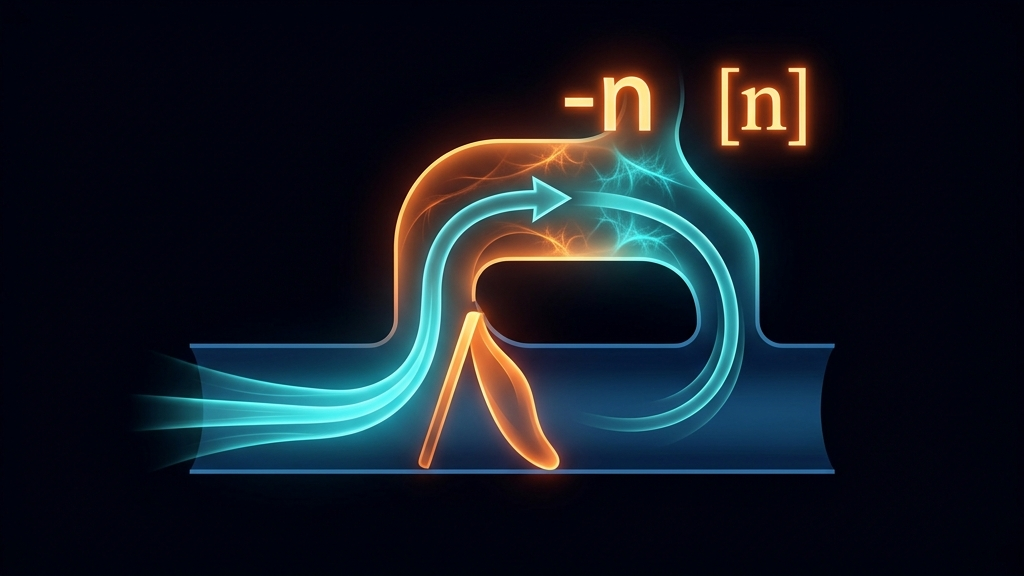
Most Mandarin syllables end in a vowel, but two of them end in a nasal hum: -n and -ng. They are mirror images. One seals the air at the front of the mouth, the other at the back, and the difference between them can change a word completely.
Front Nasal, Back Nasal
Both endings lower the soft palate so air escapes through your nose. What differs is where your mouth seals:
- -n (front): the tip of your tongue rises to the bony ridge just behind your upper teeth. The front of the mouth closes. (ān, peace; mén, door)
- -ng (back): the tongue tip stays down while the back of the tongue rises to the soft palate near your throat. The back of the mouth closes. (máng, busy; dēng, lamp)
The two are opposite gestures. For -n, the front goes up. For -ng, the back goes up while the tip drops.
The back nasal in particular rings through some of the most familiar words in Mandarin, closing the jīng of Běijīng and the zhōng of Zhōngguó (China).
A Quick Self-Check
Here is a test that needs no mirror. Say a syllable that ends in a nasal and hold the final sound, then pinch your nose shut. The sound should stop almost completely, because the air was traveling out through your nose. If sound keeps leaking through your mouth, the closure is not complete; firm up the tongue contact, at the ridge for -n or at the soft palate for -ng.
The Same Endings, Many Vowels
These two endings attach to several vowels, and the contrast holds every time: -an / -ang, -en / -eng, -in / -ing, and back-only forms like -ong. The single most practiced pair is an versus ang, which also nudges the vowel itself wider and further back. We drill that flagship contrast, with a daily exercise, in the difference between an and ang.
Why It Is Worth the Effort
The front and back nasals carry real meaning. Bān (to move) and bāng (to help), or mín (people) and míng (bright), differ only in that final closure. Train the two positions until the front-up and back-up gestures feel automatic, and a whole layer of look-alike words sorts itself out.